Time:2026-10-10 Author:Walle Machine
With millions of tons of obsolete electronics generated globally every year, recycling Waste Electrical and Electronic Equipment (WEEE) has become one of the most profitable sectors in modern waste management. Scrap household appliances—ranging from refrigerators, washing machines, and air conditioners to small kitchen appliances—contain high proportions of valuable metals (copper, aluminum, iron) and recyclable plastics.
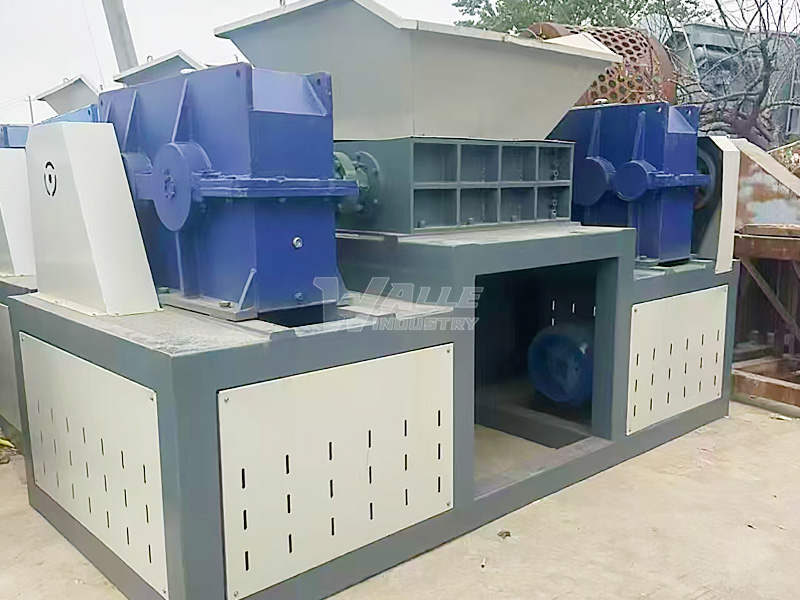
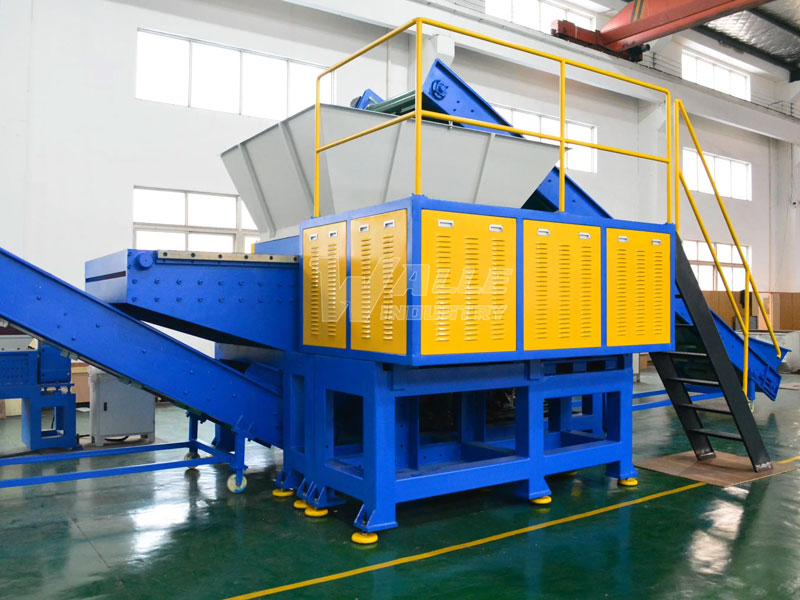
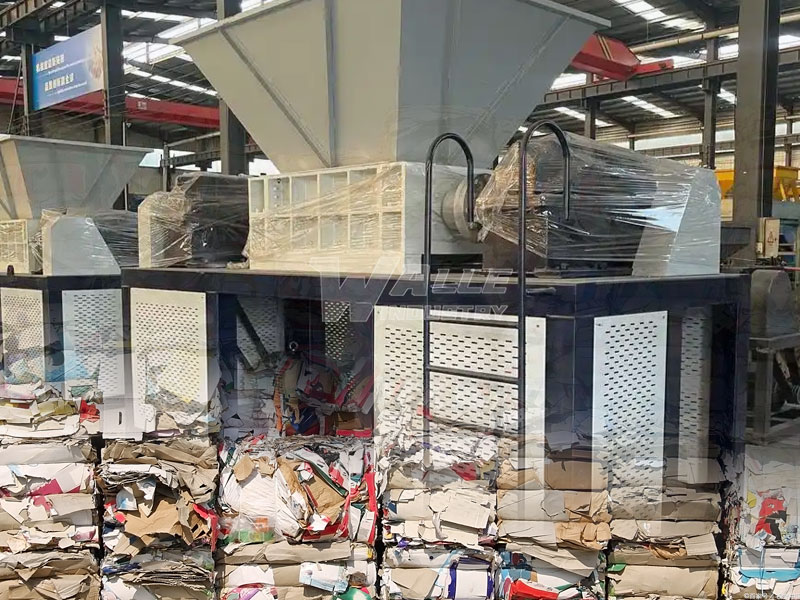
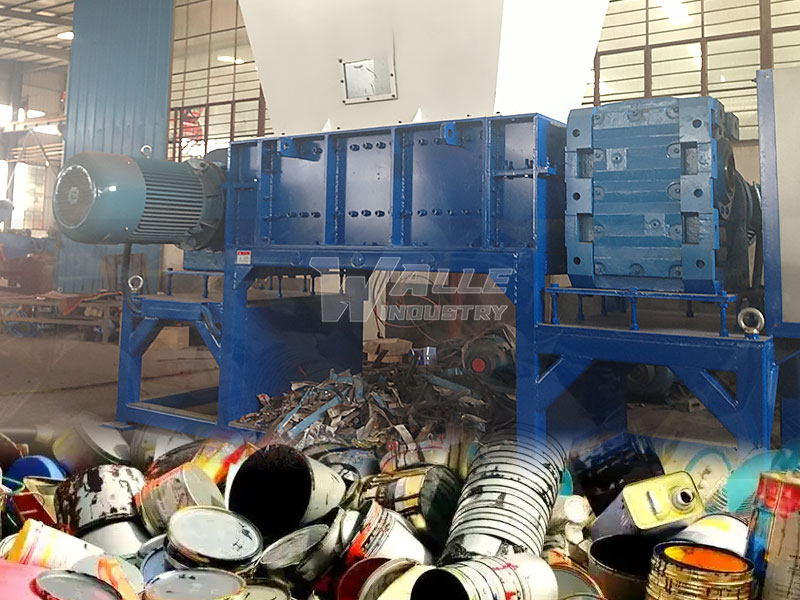
Investing in a high-efficiency scrap home appliance shredder allows recycling plants to process bulky e-waste rapidly, reduce volume for transport, and prepare shredded materials for downstream automated sorting systems.
Processing large household appliances requires extreme crushing force and robust components capable of handling mixed materials simultaneously. Our heavy-duty industrial shredders are engineered with advanced cutting technology:
Our double-shaft shredders utilize low-speed, high-torque hydraulic or electric driving systems. Unlike high-speed crushers that generate excessive dust and noise, the interlocking claw blades pierce, shear, and tear bulky steel housings, plastic frames, and internal components with maximum torque and energy efficiency.
Blades are the heart of any e-waste shredder. Manufactured from premium SKD-11, D2, or Cr12MoV alloy tool steel, our knives undergo specialized vacuum heat treatment and precision forging. They deliver outstanding impact resistance and long service life when processing tough sheet metal, stainless steel drums, and thick plastics.
Equipped with a Siemens PLC control panel, the machine continuously monitors motor electrical currents. When encountering ultra-thick un-shredded steel blocks or heavy motor rotors, the automated auto-reverse mechanism temporarily reverses blade direction to clear blockages and protect drive gearboxes.
A shredder is the first stage of a complete WEEE recycling plant. Our equipment easily integrates with secondary hammer mills, magnetic drum separators (for ferrous metals), eddy current separators (for copper and aluminum), and air-zig-zag classifiers for clean plastic recovery.
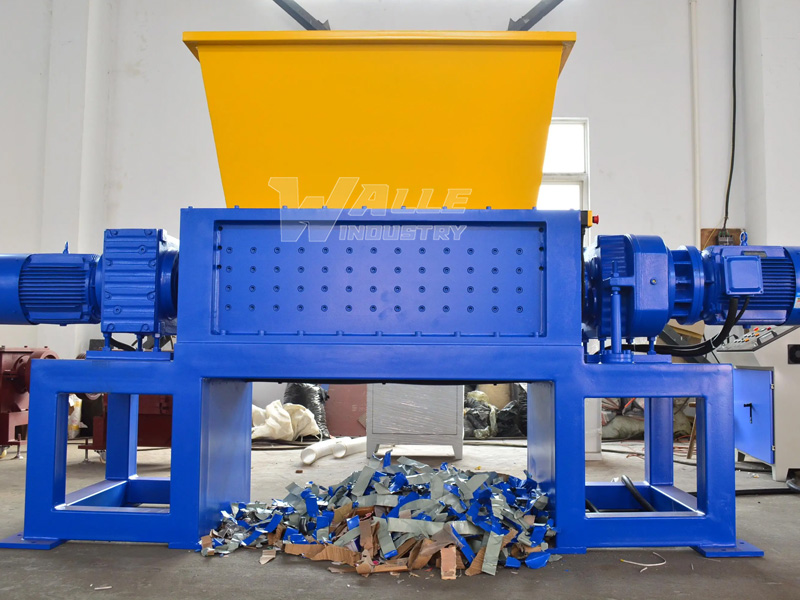
To assist plant operators in sizing their equipment, we offer flexible configurations ranging from single-unit shredders to 10+ ton/hour turnkey recycling lines:
| Equipment Model | Drive Power (kW) | Rotor Chamber Size (mm) | Processing Capacity (Tons/Hr) | Target Raw Materials |
| WL-1000 | 45 kW – 75 kW | $1000 \times 800\text{ mm}$ | 1.5 – 3.0 t/h | Small electronics, microwaves, printers, TVs |
| WL-1200 | 75 kW – 110 kW | $1200 \times 1000\text{ mm}$ | 3.0 – 5.0 t/h | Washing machines, computer towers, small fridges |
| WL-1600 | 132 kW – 200 kW | $1600 \times 1200\text{ mm}$ | 5.0 – 8.0 t/h | Full-size refrigerators, AC units, mixed WEEE |
| WL-2000 Heavy | 220 kW – 315 kW | $2000 \times 1500\text{ mm}$ | 8.0 – 12.0+ t/h | Industrial e-waste, scrap car shells, bulky appliances |
Heavy-Duty Structural Durability: Heavy steel plate frames are stress-relieved and CNC-machined to withstand continuous heavy shock loads during continuous operation.
Modular Blade Maintenance: Hexagonal shafts allow quick blade replacement or hardfacing without dismantling the entire rotor assembly, minimizing plant downtime.
Global Compliance & Safety: Engineered with CE and ISO9001 certifications, featuring emergency stops, safety interlocks, and dust suppression spray systems.
Turnkey EPC Project Delivery: From initial capacity planning and 3D plant layout design to equipment manufacture, on-site installation, and operator training.
A: Yes. Our heavy-duty WL-1600 and WL-2000 models are designed with wide feeding hoppers and high-torque rotors capable of shredding whole refrigerator shells directly. When combined with polyurethane foam recovery and degassing systems, it provides a complete eco-friendly recycling solution.
A: Blade lifespan depends on material composition. Under standard mixed e-waste conditions, high-alloy SKD-11 blades typically operate for 800 to 1,500 working hours before requiring sharpening, resharpening, or hardfacing.
A: The primary double-shaft shredder produces strip-like fragments ranging from $50\text{mm}$ to $150\text{mm}$. For finer output sizes ($10\text{mm}$–$30\text{mm}$) suitable for automated air or optical sorting, we recommend adding a secondary heavy-duty hammer mill or granulator behind the shredder.
Ready to upgrade your metal and e-waste processing facility? Contact our engineering team today to receive a customized CAD line layout, flow chart, and detailed machinery quotation tailored to your hourly capacity requirements.
Learn More:


Copyright © 2026 Walle Recycle All Rights Reserved.